Module 4: Pick the Right PCI SAQ
Most businesses validate PCI DSS compliance through a Self-Assessment Questionnaire. There are several SAQ types — this guide helps you find the right one for your setup.
For the formal definition see SAQ Self Assessment. This module is the learn-by-doing version.

Most businesses validate PCI DSS compliance not through an external audit but by filling in a form. That form is the Self-Assessment Questionnaire, and choosing the right one matters more than most people realise — pick the wrong version and you're either doing far more work than required, or claiming compliance you can't actually demonstrate.
A Self-Assessment Questionnaire (SAQ) is a structured form published by the Payment Card Industry Security Standards Council that lets a business confirm in writing that it meets the relevant PCI DSS requirements for how it accepts card payments. There are nine versions — A, A-EP, B, B-IP, C, C-VT, P2PE, SPoC, and D — and each one fits a specific payment setup, from a small shop using a card terminal to an e-commerce site processing millions of transactions. The merchant completes it once a year and submits it to their acquiring bank.
The Self-Assessment Questionnaire, almost always shortened to SAQ, is the validation route used by the vast majority of merchants — anyone not classified as Level 1. Each SAQ type covers a different payment scenario: SAQ A applies to merchants who fully outsource card handling to a compliant third party, SAQ D covers everything else and runs to over 300 questions. Picking the wrong one is a common mistake, and getting it wrong means either wasted effort or a compliance gap your acquirer will eventually catch.
What Is a Self-Assessment Questionnaire?
For the vast majority of businesses, PCI DSS compliance validation means completing a Self-Assessment Questionnaire — an SAQ. It's a structured form published by the PCI Security Standards Council that asks you to confirm whether your business meets specific PCI DSS requirements based on how you handle card data.
It's a compliance checklist tailored to your particular payment setup. Rather than having an external auditor test every aspect of your security (which is what Level 1 merchants must do, as we covered in Guide 3), an SAQ allows you to self-certify that you're meeting the requirements. You complete it annually, sign an Attestation of Compliance (AoC), and submit both to your acquiring bank.
Here's what catches businesses out: there isn't just one SAQ. There are several types, each designed for a specific way of accepting card payments. Choosing the right one is critical — using the wrong SAQ means you're either answering questions that don't apply to you or, worse, missing requirements that do.
The SAQ Types Explained
The PCI SSC publishes several SAQ types. Each one corresponds to a particular payment acceptance method and scope. Here's what you need to know about each:
SAQ A — Card-Not-Present, Fully Outsourced
Questions: 22
SAQ A is the simplest one, and it's what you should aim for if your setup allows. It applies when you've fully outsourced all card data handling to PCI-compliant third parties. Your systems never store, process, or transmit cardholder data.
Typical scenarios for SAQ A:
- E-commerce businesses using a hosted payment page (like Stripe Checkout or PayPal) where the customer enters card details on the provider's site, not yours
- Businesses taking telephone payments through a DTMF masking solution like Paytia, where card data goes directly to the payment processor without passing through your systems
- Mail order businesses where card details are entered directly into a third-party terminal by the merchant, with no electronic storage
With just 22 questions, SAQ A is manageable for even the smallest business without dedicated IT or compliance staff.
SAQ A-EP — E-Commerce with Partial Outsourcing
Questions: 191
SAQ A-EP applies to e-commerce merchants who partially outsource card processing but whose website still plays a role in the payment transaction — for example, by hosting payment page elements or using JavaScript that could affect the security of the payment process, even though card data is ultimately processed by a third party.
A common example is using a payment provider's embedded form (an iframe) within your own checkout page. Your server doesn't touch the card data directly, but your website's code and hosting environment could potentially be compromised to intercept it. At 191 questions, SAQ A-EP is significantly more demanding than SAQ A, covering web application security, vulnerability scanning, and more.
SAQ B — Imprint Machines or Standalone Dial-Out Terminals
Questions: 41
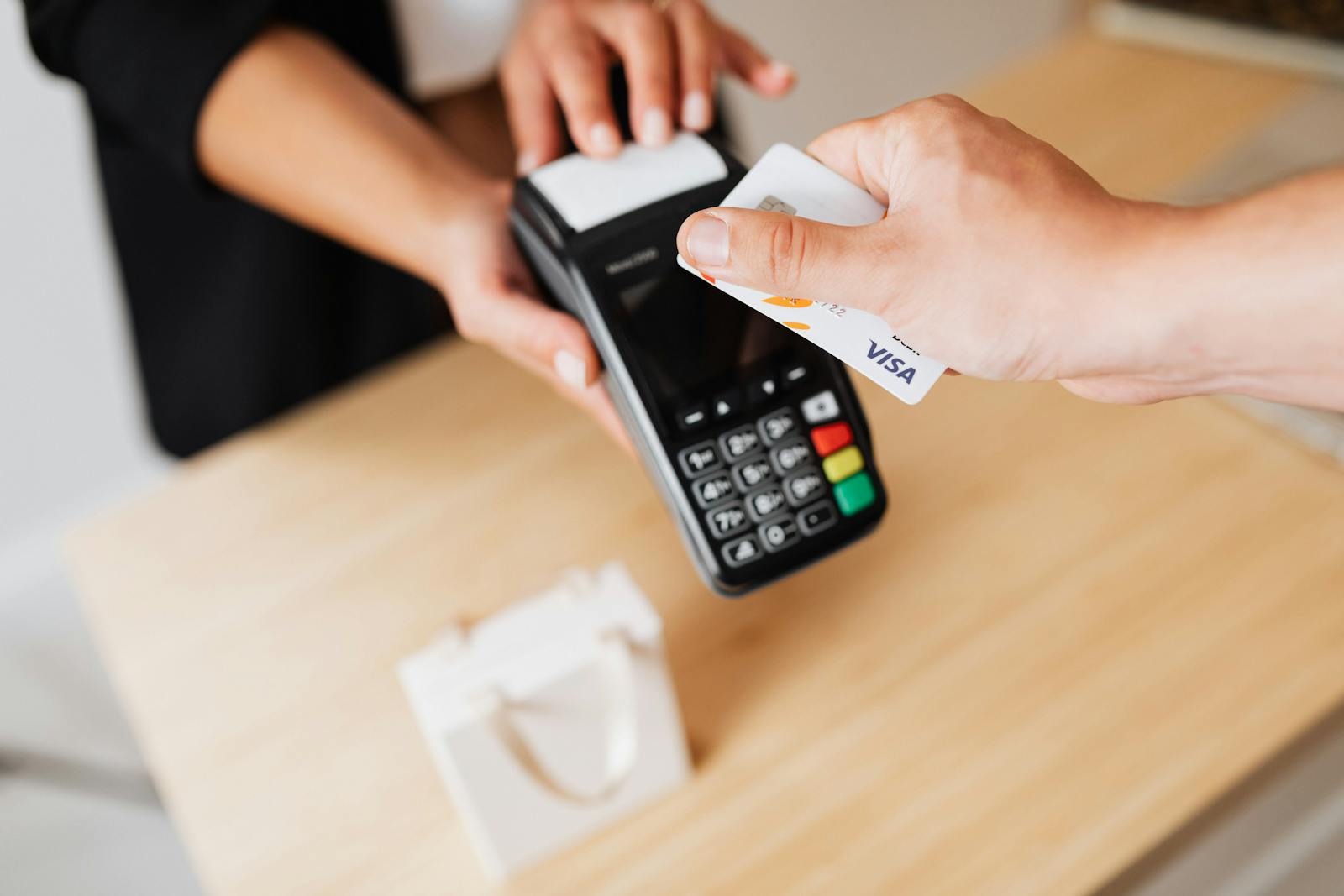
SAQ B is for merchants using standalone, dial-out payment terminals (the physical card machines that connect over a phone line) or old-fashioned manual imprint machines. These terminals must not be connected to your network or the internet. It's an increasingly rare scenario as most modern terminals use IP connectivity.
SAQ B-IP — Standalone IP-Connected Terminals
Questions: 82
SAQ B-IP covers merchants using standalone payment terminals that connect to the payment processor over an IP network (internet or private network) rather than a phone line. The terminals are PTS-approved (a hardware security standard) and are not connected to any other systems in your environment.
This is common in retail settings where the card machine connects via Ethernet or Wi-Fi to process transactions, but isn't integrated with a point-of-sale system or back-office network.
SAQ C — Payment Application Systems Connected to the Internet
Questions: 160
SAQ C is for merchants whose payment application system (such as a point-of-sale system) is connected to the internet but doesn't store cardholder data electronically. The payment application must be on a segmented network — isolated from the rest of your business systems.
SAQ C-VT — Virtual Terminal, One Transaction at a Time
Questions: 79
SAQ C-VT applies to merchants who manually enter card details into a web-based virtual terminal provided by their payment processor. The key requirements are that you're entering one transaction at a time (not batch processing), the virtual terminal is provided by your PCI-compliant processor, and your computer isn't storing card data.
This is common in small businesses and contact centres where agents type card numbers into a browser-based payment page. Note, however, that this means agents see and handle card data, which brings their workstations, the network, and the agents themselves into PCI scope. For businesses looking to avoid this, DTMF masking solutions can remove the agent from the card data flow entirely, potentially qualifying you for SAQ A instead.
SAQ D — Everyone Else
Questions: 329 (for merchants) / 347 (for service providers)
SAQ D is the full questionnaire. It covers every single PCI DSS requirement in detail. You need SAQ D if your payment setup doesn't fit neatly into any of the other SAQ categories — which usually means you store, process, or transmit cardholder data within your own systems in ways that aren't covered by the more specific SAQs.
Examples include businesses that store card numbers in their own database, process card transactions through their own servers, or have complex payment environments spanning multiple channels and systems.
SAQ D is a serious piece of work. 329 questions across all 12 PCI DSS requirements means real time, technical expertise, and documentation. The cost gap between SAQ A and SAQ D isn't just the questionnaire — it's the security controls, monitoring, and documentation you need running underneath it.
SAQ P2PE — Point-to-Point Encryption
Questions: 33
SAQ P2PE applies to merchants using a validated Point-to-Point Encryption (P2PE) solution for their in-person card payments. P2PE encrypts card data from the moment of interaction at the terminal, meaning your systems never have access to unencrypted card data. This significantly reduces scope, bringing the questionnaire down to just 33 questions.
How to Determine Which SAQ You Need
Choosing the right SAQ requires honest assessment of how card data flows through your business. Ask yourself these questions:
- Do your systems ever store card data? If yes, you're likely looking at SAQ D.
- Do your systems process or transmit card data? If you've fully outsourced this, SAQ A may apply. If your systems are involved in the transaction flow, consider SAQ A-EP, C, or C-VT.
- Do your staff see or hear card numbers? If agents type card data into a virtual terminal, that's SAQ C-VT. If you use DTMF masking so agents never encounter card data, you could qualify for SAQ A.
- What kind of payment terminals do you use? Standalone dial-out terminals point to SAQ B. IP-connected standalone terminals suggest SAQ B-IP. Terminals using validated P2PE suggest SAQ P2PE.
When in doubt, consult your acquiring bank or a Qualified Security Assessor. Getting the SAQ wrong can mean either unnecessary work (using a more stringent SAQ than required) or a compliance gap (using a less stringent SAQ than your setup actually demands).
Completing Your SAQ
Once you know which SAQ applies, the process is relatively straightforward:

- Read the SAQ instructions — each SAQ has an introductory section explaining its scope, eligibility criteria, and how to answer the questions
- Answer each question honestly — for each control, you'll indicate whether it's in place, not in place, not applicable, or whether you've implemented a compensating control
- Document your evidence — while the SAQ is self-assessed, you should maintain documentation that supports your answers. If questioned by your acquiring bank or in the event of a breach, you'll need to show your work
- Complete the Attestation of Compliance (AoC) — this is a signed declaration confirming your compliance status
- Submit to your acquiring bank — deadlines and submission methods vary by bank
An SAQ is annual, but compliance isn't. You need to keep the controls you've attested to running all year, not just at submission time. PCI DSS v4.0.1 — the only valid version since 31 March 2025, with v3.2.1 having retired a year earlier on 31 March 2024 — leans heavily on that ongoing expectation.
Reducing Your SAQ Burden
The single biggest win in PCI compliance is shrinking your SAQ by cutting your scope. Every system, process, and person that touches card data adds questions to your assessment and controls to your environment.
Practical steps to move towards a simpler SAQ:
- Use hosted payment pages for online transactions instead of processing card data on your own servers
- Implement DTMF masking for telephone payments so agents never encounter card data — this can shift you from SAQ C-VT or SAQ D to SAQ A
- Use P2PE terminals for in-person payments to qualify for the lightweight SAQ P2PE
- Stop storing card data if there's no genuine business need — use tokenisation instead
We cover scope reduction strategies in detail in Guide 5: Descoping Your PCI Environment.
Key Takeaways
- An SAQ is how most businesses validate PCI DSS compliance — it's an annual self-assessment tailored to your specific payment setup
- There are multiple SAQ types (A, A-EP, B, B-IP, C, C-VT, D, and P2PE), each for different payment scenarios — choosing the right one is essential
- SAQ A is the simplest at 22 questions, available to businesses that fully outsource card data handling. SAQ D is the most demanding at 329 questions, covering all 12 PCI DSS requirements
- The SAQ you qualify for depends on how card data flows through your business — not just whether you store it, but whether your systems or staff encounter it at any point
- Reducing scope is the key to a simpler SAQ — technologies like hosted payment pages, DTMF masking, and P2PE can dramatically reduce your compliance burden
- Compliance is continuous — maintain the controls you've attested to throughout the year, not just at assessment time
Frequently Asked Questions
Which SAQ do I need?+
It depends on how you accept card payments. SAQ A is for businesses that fully outsource all card processing. SAQ D is for businesses that store or process card data themselves. There are several types in between covering specific scenarios.
How often do I need to complete an SAQ?+
SAQs must be completed annually. You also need to keep evidence of your compliance controls throughout the year, not just at assessment time.
Can I switch to a simpler SAQ?+
Yes — by descoping your environment. For example, using a solution like Paytia for telephone payments can move you from SAQ D (329 questions) to SAQ A (22 questions) by removing card data from your systems entirely.
How long does an SAQ actually take to fill in?+
It depends entirely on which SAQ you need. SAQ A runs to 22 questions and a competent owner can finish it in an afternoon. SAQ D has 329 questions covering all 12 requirements and usually takes weeks of evidence-gathering across IT, security, HR, and finance. The question count alone tells you how much work is involved.
What happens if I complete the wrong SAQ?+
Two ways it can go wrong. Pick an easier SAQ than you qualify for and you're claiming compliance you can't actually demonstrate — your acquirer or a breach investigator will eventually catch that gap. Pick a harder one and you do far more work than required. Acquirers don't always check your SAQ choice carefully, so the responsibility sits with you to get it right.
Can I rely on my acquirer to pick the right SAQ for me?+
Not safely. Acquirers will sometimes suggest an SAQ, but the choice depends on how card data actually flows through your business — something only you can map accurately. We've seen acquirers default merchants to SAQ A who don't qualify because their setup pulls data through their own systems. The merchant signs the attestation, so the responsibility is yours.
Did v4.0.1 change anything about the SAQ forms themselves?+
Yes. The PCI SSC updated every SAQ to match v4.0.1, with new controls reflected in the question sets and the future-dated requirements becoming mandatory on 31 March 2025. SAQ D in particular grew to cover the new authentication, scripting, and continuous-monitoring controls. If you last completed a v3.2.1 SAQ, the v4 forms will look different.
Related Glossary Terms
Ready to simplify your PCI compliance?
Book a personalised demo and we'll show you how Paytia can descope your telephone payment environment.
Trusted by law firms, insurers, healthcare providers and regulated businesses worldwide. Learn more about Paytia