Take the deposit at the US POS. Take the balance online or by phone.
In-person payment flow
Secure, tokenized, cross-channel
- 1Customer taps or inserts on the Verifone terminal
- 2Payment authorized, card tokenized
- 3Follow-up payments use the token, no terminal needed
- 4Refunds issued through any channel
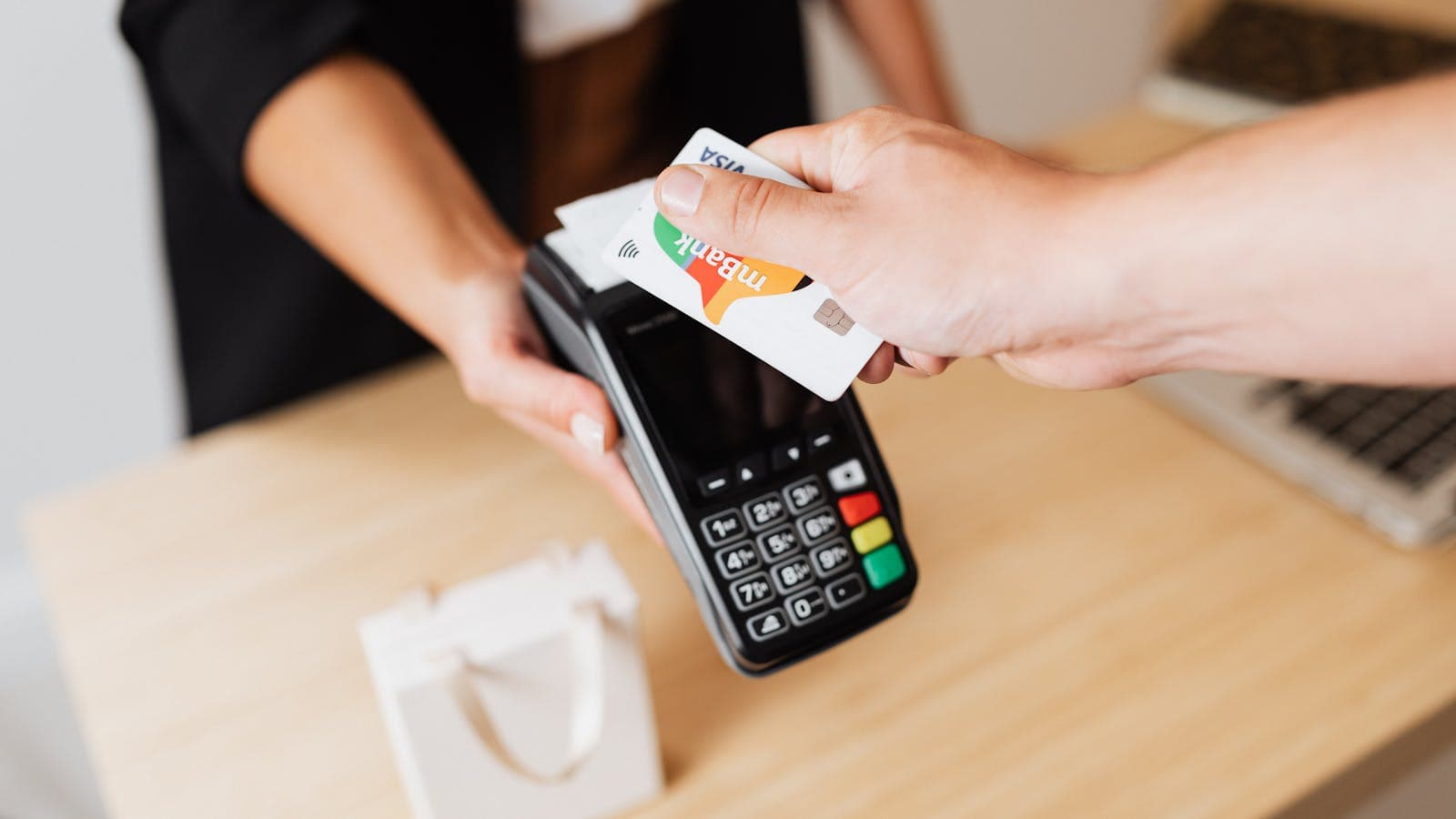
How in-person payments work
Initiate from your CRM or iPad app
Your associate starts the payment from whatever tool they're already in — browser-based CRM, iPad sales app, or any system that calls the Paytia API. Paytia sends the request to the connected Verifone terminal.
Customer pays at the terminal
The customer inserts, taps, or uses their mobile wallet on the terminal. The Verifone device handles card capture and authorization. Card data never touches your systems.
Get a token, use it anywhere
Paytia returns a tokenized reference for the card. Use that token later to take the balance online or by phone, issue a refund, or capture a follow-up deposit — all without bringing the customer back into the store.
Three use cases, one token
The same token flows through the whole customer lifecycle — deposit, follow-up, refund. Your team stops chasing payment details and starts closing tickets.
Take a deposit in-store
The customer pays a deposit on the Verifone terminal in your store. They insert or tap the card, the terminal authorizes the payment.
Paytia returns a token that represents the card. Your CRM gets a webhook confirming the payment and storing the token against the customer record. Card details never pass through your staff or your systems at any point.
Take the balance without the card
Days or weeks later, the balance is due. Maybe it's the final payment on install day. Maybe it's the next installment. Your team takes the payment using the stored token, from the CRM or iPad, without needing the customer or their card.
No terminal interaction. No phone call to read out a card. No payment link to chase. The token authorizes the follow-up against whichever acquirer Paytia's connected to.
Refund across any channel
Returns, part-refunds, adjustments — handled from whichever channel makes sense. A payment taken at the terminal can be refunded from the CRM. A phone or online payment can be refunded to the card on file from the same dashboard.
By default refunds go back to the original card (card-network rule). Where your acquirer permits an alternative destination — for example if the original card has expired — Paytia supports that flow with the right approvals in place.
What you get with Paytia in-person payments
A Verifone-connected terminal setup isn't new. What is new is the rest of the lifecycle — the token, the refunds, the cross-channel reuse — sitting on top of it without you having to stitch it together yourself.
Verifone-supported terminals
Works with your existing Verifone POS estate. No new hardware required unless you want it — Paytia connects to the terminals your acquirer already provisioned.
Tokenized card reuse
Every in-store transaction returns a token that can be used across Paytia channels. Take a deposit at the terminal, take the balance by phone. One card, one customer, one record.
Cross-channel refunds
Refund any Paytia-processed payment from a single interface — POS, online, phone, chat, all visible in the same dashboard. No juggling separate refund tools.
Any-acquirer support
Your in-store terminal may sit behind one acquirer and your online gateway behind another. Paytia's token layer works across both — the follow-up uses the gateway you choose, not the one locked to the terminal.
PCI DSS scope reduction
Card data is captured by the terminal directly and never enters your environment. For most customers that drops the in-store channel from SAQ D (329 controls) to SAQ A (22).
Real-time webhooks
Every state change — authorized, settled, refunded, failed — fires a webhook back to your CRM. Your records stay current without anyone having to refresh a dashboard.
Security & compliance
Card data is captured on the Verifone terminal and goes straight to Paytia's PCI DSSLevel 1 environment. It doesn't pass through your CRM, your staff, or your servers.
Tokenization
The terminal returns a non-reversible token in place of the card number. Tokens can be stored in your CRM safely — they're useless to an attacker and out of PCI scope.
TLS + AES-256
All data between the terminal, Paytia, and your systems is encrypted in transit with TLS 1.2+ and at rest with AES-256. Standard, verifiable, no novel cryptography.
PCI DSS Level 1
Paytia is independently audited against PCI DSS Level 1 every year. The in-person channel is covered under the same certification as our phone and online products.
Webhook signatures
Webhook payloads are signed so your CRM can verify they came from Paytia and haven't been tampered with. Replay protection built in.
US data handling
Paytia supports US data handling requirements for healthcare (HIPAA BAAs where applicable), state-level privacy (CCPA, NY SHIELD), and federal frameworks relevant to your sector.
Full audit trail
Every action — who triggered what, which terminal, which token, which acquirer, which outcome — is logged and exportable. Same trail regardless of the channel.
Who it's for
In-person payments with token reuse are most useful where the sale doesn't complete in one visit. Deposits now, balance later.
Retail with deposits
Furniture, kitchens, bathrooms, flooring, custom orders. The customer pays in-store, the work happens later, the balance is due on completion.
Hospitality
Hotels, restaurants, event venues where a deposit is taken at booking or check-in, and the final bill is settled later — ideally without the customer waiting to re-swipe at checkout.
Professional services with installments
Legal retainers, elective healthcare, private education, consulting engagements where payment is staged across milestones or months.
Frequently asked questions
Which terminals are supported?+
Verifone terminals day one. Paytia connects to your Verifone POS over the standard terminal integration path, so any Verifone device your acquirer provisions should work. Ingenico, PAX, and other vendors aren't supported at this stage.
Can the follow-up payment use a different acquirer than the one that took the deposit?+
Yes. The token returned from the in-store transaction can be used to process a follow-up payment through any acquirer Paytia is connected to — useful if your online gateway is different from the one sitting behind your Verifone terminal.
What if the customer wants to pay the balance on a different card?+
Take the balance through any of Paytia's other channels — phone, payment link, web chat — and capture the new card there. The original token stays with the deposit record; a new token handles the balance. Nothing's forcibly tied together.
What happens to the token if the customer disputes the original deposit?+
The token is still valid technically — it's a reference, not a commitment — but we'd recommend holding further payments against it until the dispute is resolved. Paytia flags tokens with active disputes in the dashboard.
Do tokens expire?+
Tokens don't expire automatically. Card expiration dates do — so if the underlying card expires before you reuse the token, the follow-up payment will fail and you'll need a fresh card. Paytia returns expiration metadata with the token so you can schedule around it.
How does this reduce our PCI DSS scope?+
Card data is captured by the Verifone terminal directly — it never enters your CRM, your staff's laptops, or your servers. Paytia only holds the token, which is non-sensitive. For most customers the in-store channel drops from SAQ D to SAQ A, the same way our phone and online products do.
Do refunds have to go back to the original card?+
By default yes — card network rules require refunds to the original payment method. Where your acquirer permits alternative refund destinations (for example, if the original card has expired), Paytia supports that flow with the right approvals in place.
Can the in-person flow run from an iPad or tablet?+
Yes. The Paytia in-person flow is triggered from whatever web-based app your team uses — a browser-based CRM, an iPad sales tool, or your own internal app through our API. The terminal receives the request, the customer taps, and the result comes back via webhook.
What if the terminal or the network drops mid-transaction?+
The terminal handles card authorization independently, so a network drop between the terminal and Paytia doesn't invalidate a payment that already authorized. Paytia reconciles state on reconnect and fires the webhook when things settle. Status is visible in the dashboard throughout.
How long does integration take?+
Depends on your CRM and whether you're using a new Verifone terminal or adapting an existing one. A typical integration is 4-8 weeks from kickoff to first live transaction — most of the time goes into defining payment triggers inside your CRM rather than on the Paytia side.
“Paytia's solution has transformed our telephone ordering process. We've dramatically improved efficiency while ensuring the highest levels of payment security. Our team now spends less time processing payments and more time delivering the exceptional customer experience that defines our brand.”
Warby Parker
VP of Customer Experience
Read the case study →Used by British American Tobacco · Howard Kennedy · CITB · Clinical Partners · Trinity Hall College
Since 2016
Building secure payments
PCI DSS Level 1
Highest certification
99.99%
Platform uptime
$500M+
Transactions processed
Ready to take in-person payments that carry on after the customer leaves?
Book a demo to see the deposit-to-balance-to-refund flow end to end on your own systems.
Trusted by US law firms, insurers, healthcare organizations and regulated businesses that can't afford to get compliance wrong. Learn more about Paytia