Keep your existing Adyen setup and add secure telephone payment capabilities without disruption.
Adyen's single-platform approach means one contract and one integration for online, in-store, and telephone payments. Adding Paytia extends that to your phone channel without a separate gateway.
Add secure Mail Order Telephone Order (MOTO) capabilities to your Adyen account for telephone credit card processing — PCI-compliant from day one.
PCI-compliant telephone payment processing with DTMF masking through your Adyen account. Card data is captured on Paytia's infrastructure — your contact centre stays out of PCI scope.
Adyen holds its own acquiring licence in many markets. That means fewer hops in the payment chain — and potentially lower processing costs — for your telephone payments too.
Telephone payments appear in your Adyen dashboard alongside online and in-store transactions. One view of all your payment data, no reconciliation between separate systems.
Agents stay on the call and guide customers through payment. Card details are captured via the customer's keypad — the agent sees only a real-time status screen, never the card number.
Adyen's RevenueProtect fraud detection — including risk scoring and velocity rules — applies to MOTO transactions submitted via Paytia in the same way it applies to your online payments.
Adyen's Payment Components and Drop-in UI give you flexible options for how customers interact with payments online. Paytia adds the equivalent secure capture layer for the phone channel.
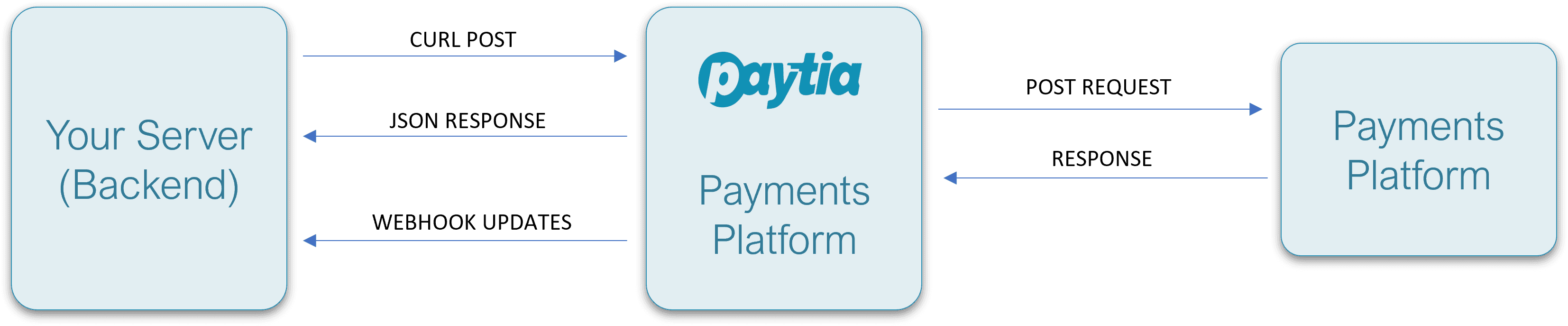
Paytia connects to Adyen's REST API. Adyen's webhook notifications for payment events — authorisations, refusals, captures — work exactly as they do for your online payments.
Adyen separates test and live environments completely. We validate the full telephone payment flow in Adyen's test environment before switching on, so nothing goes live untested.
Paytia captures card data via DTMF and passes a payment token to Adyen. Raw card data never enters your contact centre environment or Paytia's systems.
Because Paytia submits to Adyen via the standard API, RevenueProtect's risk rules apply to telephone payments in the same way they apply to online transactions. No separate fraud configuration needed.
Adyen's single-platform approach is one of its real strengths. Paytia extends that to your phone channel without a separate gateway contract, a separate reconciliation process, or changes to how your fraud tools are configured.
See how Paytia connects to your Adyen payment gateway to enable secure telephone credit card processing.
Any business using Adyen that also takes payments over the phone can benefit from adding Paytia.
Use Adyen's global acquiring and multi-currency support for telephone payments across international markets.
Take secure phone bookings and deposits through your existing Adyen account without handling card data.
Descope your entire telephony environment from PCI DSS while keeping Adyen's fraud tools active.
Use Adyen's tokenisation with Paytia's telephone capture for secure recurring payment setup over the phone.
Common questions about using Paytia with your Adyen payment gateway.
Paytia connects to your existing Adyen merchant account via a secure API integration. No changes to your Adyen configuration are needed — Paytia handles the secure card data capture layer and passes tokenised payment data to Adyen for processing.
Paytia is PCI DSS Level 1 certified. By capturing card data through our secure DTMF masking technology, your agents never hear or see card details. This removes your contact centre from PCI scope entirely, while your Adyen gateway continues to handle payment processing as normal.
Yes. Agents stay on the call throughout the payment process. They can guide customers through each step while Paytia captures card details securely via the customer's telephone keypad. The agent sees a real-time status screen but never has access to the card number.
Paytia supports single payments, pre-authorisations, recurring payments, and payment links — all processed through your Adyen gateway. You can also use tokenisation to store card details securely for future transactions.
Yes. Paytia supports card type restrictions, allowing you to control which card brands and types are accepted for telephone payments through your Adyen gateway.
Yes. Because Paytia submits tokenised payment data to Adyen for processing, all of Adyen's built-in fraud detection and risk management tools — including RevenueProtect — apply to telephone payments in the same way they apply to your online transactions.
Most businesses are live within a few days. There is no hardware to install, no software to deploy, and no changes to your existing Adyen configuration. Paytia connects via API and sits alongside your existing payment flows.
Yes. All telephone payments processed through Paytia are submitted to Adyen and appear in your standard Adyen reporting alongside your online and in-store transactions, giving you a unified view of all payment channels.
Get started in minutes. No changes to your existing Adyen setup. Just secure, PCI-compliant telephone payments.
Trusted by law firms, insurers, healthcare providers and regulated businesses worldwide. Learn more about Paytia