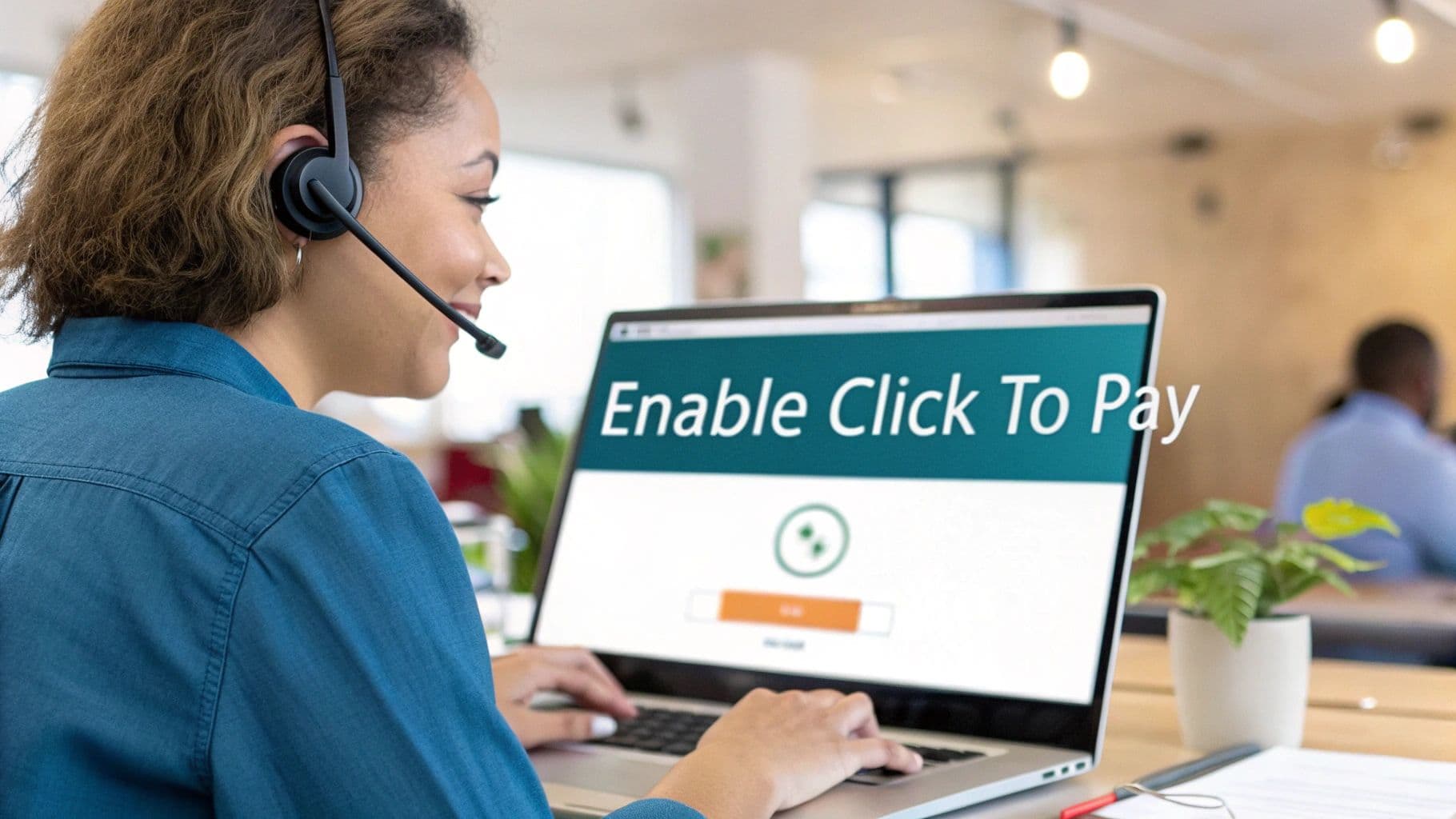
If you're picking a payment processor for a US business, the choice usually comes down to a handful of names. They're all competent. They're all PCI compliant. They all support 3DS2 and tokenization. But they're not interchangeable, and the right answer depends a lot on what your actual checkout looks like — especially if any of it happens over the phone.
This is a working comparison of the major US options, written from the perspective of a payment security vendor who integrates with all of them. We're not trying to crown a winner. We're trying to help you ask sharper questions.
Stripe#
Stripe is the developer-first option that ate the mid-market over the last decade. Pricing is famously transparent — 2.9% + 30¢ for standard cards, with various add-ons (Radar for fraud, Sigma for analytics, Billing for subscriptions) priced separately.
What Stripe does well:
- The best developer experience in the industry — clean API, great docs, working examples in every language
- Strong ecosystem of payment methods (cards, ACH, wallets, BNPL, regional methods)
- Stripe Terminal for in-person card-present transactions
- Built-in fraud (Radar) that uses cross-Stripe signal
- Stripe Connect for marketplaces
What to watch for:
- Phone payments aren't a first-class workflow. The native solutions assume web checkout. If you need to take card details over the phone in a PCI-friendly way, you'll need to bolt on a dedicated phone-payment layer.
- Account stability has been a recurring complaint for some industries — payments can be paused with limited recourse if Stripe's risk team flags activity.
- Percentage pricing makes Stripe excellent at low ticket sizes and increasingly expensive at high ones. At enterprise volumes, custom pricing from one of the bigger acquirers usually beats it.
Braintree#
Braintree has been part of PayPal since 2013. Pricing is similar to Stripe at 2.59% + 49¢ for standard cards. The main differentiator is bundled access to PayPal and Venmo as payment methods alongside cards.
What Braintree does well:
- One integration covers cards, PayPal, Venmo, Apple Pay, and Google Pay
- Account Updater service — when a card is reissued, the on-file token gets updated automatically (very useful for subscriptions)
- Strong recurring billing support via vault tokens
- Solid international coverage through PayPal's network
What to watch for:
- Documentation is more enterprise-formal than Stripe's — still good, but a different style
- The PayPal relationship is a feature for some merchants and a complication for others, depending on how comfortable you are with PayPal's risk decisions affecting your card processing
- Phone payments aren't a native workflow here either
Authorize.Net#
Authorize.Net is one of the oldest names in US online payments — founded in 1996, acquired by Visa in 2010. It's now sold both directly and through thousands of reseller relationships.
What Authorize.Net does well:
- Native virtual terminal for taking card details over the phone, in person, or by mail
- Strong MOTO (mail order / telephone order) heritage — this is core to the product, not bolted on
- Recurring billing, customer profiles, and tokenized vault built in
- Works with a huge number of merchant account providers, so you can usually keep your existing acquirer
What to watch for:
- The API is older and feels it — it's stable, but not as pleasant to work with as Stripe or Braintree
- Pricing involves a monthly gateway fee plus per-transaction fees, which adds up at low volumes
- The virtual terminal solves the "need to take a phone payment" problem at the keyboard level, but it doesn't keep the card number off the call recording or out of the agent's hearing — for that you still need a DTMF or channel-separation layer
Cybersource#
Cybersource is the enterprise gateway also owned by Visa. It's aimed at large merchants and acquirers, and pricing is custom.
What Cybersource does well:
- Decision Manager — one of the most-respected fraud engines in the industry, used by very large merchants
- Token management and account updater services
- Global reach through Visa's network
- Multi-acquirer routing — you can route different transactions to different acquirers based on rules
What to watch for:
- Definitely an enterprise product — sales cycles are long, integration is heavier than the developer-first options
- Pricing isn't published, so comparison requires going through procurement
- Phone payments need to be designed in — Cybersource provides the gateway, you provide the workflow
Adyen#
Adyen is the Dutch-headquartered enterprise platform that came out of nowhere over the last fifteen years and now sits behind a lot of large global merchants. In the US it competes for the same enterprise accounts as Cybersource, Worldpay, and Stripe.
What Adyen does well:
- Single platform across cards, alternative payment methods, point of sale, and online
- Unified reporting across regions and channels
- Direct connections to acquirers in many markets, which can reduce intermediary fees at scale
- Strong tokenization and risk tooling
What to watch for:
- Pricing is custom and only really makes sense at decent volume — it's not a small-merchant play
- Implementation is a project, not a weekend
- Like the other enterprise options, phone payments are something you build around the platform rather than something the platform gives you out of the box
Worldpay#
Worldpay is one of the oldest acquirers in the world, now owned by FIS. It's particularly strong in the US for merchants who came up through traditional acquiring relationships — retail chains, healthcare, hospitality, and a lot of MOTO businesses.
What Worldpay does well:
- Traditional acquirer with strong MOTO experience and processes
- Multiple gateway options including their own and partner gateways
- Established relationships with the card brands and a long history of running large books
- In-person and online integrations
What to watch for:
- Pricing is custom and relationship-driven — not the place to go if you want a self-serve sign-up
- The product surface area is large and varies by region — make sure the contract covers exactly the products you'll actually use
- Modern developer experience varies by which Worldpay product line you're using
The phone-payment question#
Here's the bit nearly every acquirer comparison glosses over: none of these acquirers solve the contact-center phone-payment problem natively. They all let you charge a card once you've got the number. None of them give you a clean way to capture the number from a customer on a recorded call without dragging your contact center fully into PCI scope.
The traditional workarounds — ask the customer to read the card out and hope your recording suppression works, send them a payment link by SMS or email mid-call, transfer them to an IVR — all have downsides. Read-aloud puts card data in your recordings and your agent's hearing range. SMS links push the customer into a different channel and tank your completion rate. IVR transfers break the conversation and lose the relationship.
This is the gap Paytia fills. We sit between the customer's call and whichever acquirer you've chosen. The agent stays on the line, the customer types their card on their phone keypad, the digits are masked from the agent and never written to the recording, and the transaction is sent to your existing payment gateway — Stripe, Braintree, Authorize.Net, Cybersource, Adyen, Worldpay, or any other major gateway. Your acquirer relationship doesn't change. Your contact center scope shrinks dramatically.
How to pick#
Some rough heuristics, based on what we see across customer integrations:
- Online-first, mid-market, developer-led team: Stripe or Braintree. Pick Braintree if you specifically want PayPal/Venmo. Pick Stripe if you want the broader product ecosystem.
- Lots of MOTO, want the cheapest path to a working virtual terminal: Authorize.Net through a reseller, especially if you already have a merchant account relationship.
- Enterprise volumes, custom pricing matters, fraud is a major workload: Cybersource or Adyen. Cybersource if you're a big Visa shop. Adyen if you want unified online + POS + global.
- Traditional acquirer relationship, retail/hospitality/healthcare context, complex back office: Worldpay or another tier-one acquirer.
Whichever you pick, ask the same question upfront: how does this acquirer handle phone payments without putting card data into my contact center? In most cases the honest answer is "that's not what we're built for — you'll want to bring a separate layer for that." Knowing that going in saves a lot of late-stage surprise.
Where Paytia fits#
Paytia is a PCI DSS Level 1 service provider, certified since 2016, with over $500 million in card payments processed through our DTMF-masking platform. Our US base is in New York.
We're gateway-agnostic by design. Our job is to capture the card details securely from a phone call and pass the transaction to whichever acquirer or gateway you already use. We integrate with Stripe, Braintree, Authorize.Net, Cybersource, Adyen, Worldpay, and others. If you've already got an acquirer relationship that works for you, you keep it. If you're picking one for the first time, we're happy to help you think through the trade-offs without pushing you towards any particular partner.
If you'd like to walk through a phone-payment workflow on your current gateway, get in touch with our New York team.
The bottom line#
There's no single best US acquirer — there's a best one for your specific volume, ticket size, channel mix, and team. The most common mistake we see is picking an acquirer on web-checkout merits alone and then trying to retrofit a phone-payment workflow afterwards. Build the phone story into your selection from the start, and the rest of the choice gets a lot clearer.