
US reader? See the US version of this guide with US-specific compliance detail (TCPA, NYDFS, CCPA, FedNow, US PCI scope guidance).
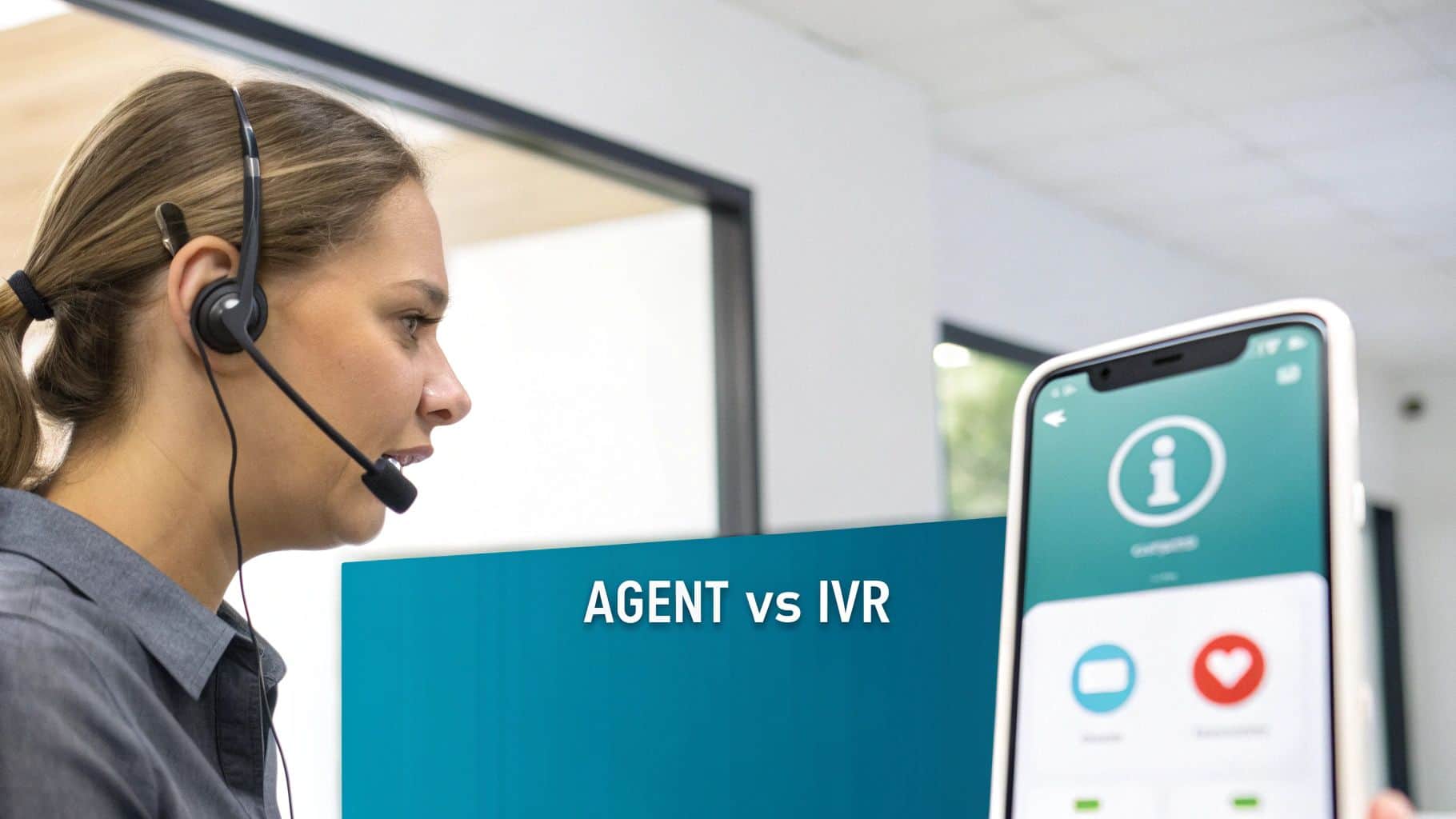
The simple difference: an IVR payment is a self-service flow where the customer keys their card into an automated voice menu with no agent on the line, while an agent-assisted phone payment keeps your team on the call right up to the point the customer enters their card. Both can be PCI-compliant. They suit very different call types, and most contact centres end up running both side by side.
When IVR fits and when it doesn't#

IVR works where the customer already knows what they're paying for. Bill payment, parking fines, premium top-ups, repeat collections — anywhere the conversation amounts to "I owe £42 on account 1234, take it now." The customer doesn't need an agent. They need a fast, 24/7 way to settle. Pushing those calls into an agent queue is expensive on both sides — your wage bill goes up, the customer waits on hold for a transaction they could have completed in 90 seconds. IVR payments are designed for exactly this volume.
Where IVR struggles is anything that requires explanation. Insurance applications, multi-product orders, account changes, or a customer who's confused about the bill. Drop those into an automated flow and you'll see abandonment climb. The right test isn't technical capability — it's whether the customer will hear the menu and think "yes, that's me" or "I want a person."
What agent-assisted phone payments actually do#
An agent-assisted call keeps your team on the line throughout. The agent handles the conversation — the upsell, the queries, the rapport — and at the moment of payment, the card capture is split off into a secure channel. The customer types their digits on their own keypad. With DTMF masking running on the line, the touch-tones are replaced with flat audio in everything the agent can hear and the recording can capture. The card data routes straight to the gateway. The agent never hears it. The recording never captures it. The CRM never sees it.
That's the architecture that makes agent-assisted phone payments compliant under PCI DSS v4.0.1. The agent stays on the call so the conversation doesn't break, but the digits don't enter your environment.
Comparing options? Book a 15-minute Paytia demo — we'll show you a live capture and quote a real number for your call volume.
The PCI scope difference#
This is where buyers usually get tripped up. People assume IVR is automatically more compliant because there's no human in the loop. It's not quite that simple.
Both architectures, done right, can keep your contact-centre systems out of PCI scope. IVR keeps the entire call away from your agents and your network — the cardholder data flow happens inside the IVR provider's environment. Agent-assisted with DTMF masking achieves the same outcome by intercepting the digits mid-call. Either route, properly implemented, can take up to 96% of your contact-centre operations out of audit scope.
What's not compliant — in either model — is letting the customer read their card aloud and pausing the recording. v4.0.1 has effectively closed the door on that as a standalone control. If your current setup relies on agent pause-and-resume, you need a technical solution, regardless of which of the two architectures you pick.
What each one costs the business operationally#
IVR is cheaper per transaction. No agent time, no wait queue, no wrap-up. The customer self-serves; you pay for the platform and the gateway fee. The trade-off is conversion on anything that isn't a clean repeat payment — first-time customers, complex orders, anyone who'd benefit from a brief conversation before they hand over the card.
Agent-assisted costs more per call because you're paying for agent time. What you get back is conversion on the calls that actually need it — the upsell, the cross-sell, the customer who almost dropped out and didn't because the agent reassured them. For complex assisted sales, that revenue uplift dwarfs the per-call cost difference.
Run the numbers on your real call mix. Most contact centres find a 60/40 or 70/30 split between repeat-payment volume that should be IVR and complex calls that should be agent-assisted. Forcing one model onto the other is what blows up either your wage bill or your conversion rate.
Who picks which#
If your call profile is mostly repeat collections — utilities, council tax, subscription renewals, parking — start with IVR. The volume is high, the conversation is short, and customers will thank you for not making them queue. The automatic call distributor on the front end can route the few calls that genuinely need an agent.
If your call profile is sales, account management, or any complex assisted journey, agent-assisted is where the money is. The agent earns their seat on the call. DTMF masking handles the compliance piece without breaking the conversation flow.
Most contact centres land on both, with the IVR handling the bulk of repeat payments and agent-assisted reserved for calls that warrant a person. The choice isn't either-or — it's which call type goes where. If you'd like to walk through which split fits your environment, we run free 30-minute consultations and we'll be straight about which model your real call mix needs.
Related reading#
- Our IVR payment solutions
- Pillar guide: PCI Compliance for Telephone Payments: 2026 Guide
- What Is a BT Payment Line? How It Works Explained
- Is It Safe to Give Card Details Over the Phone? 2026 Guide
- How to Comply with GDPR for Phone Payments Guide
- UK Phone Payment Regulations: 2026 Compliance Guide
Comparing options? Book a 15-minute demo — we'll show you a live capture and quote a real number for your call volume.