

Quick summary
Channel separation is the cleanest way to deliver DTMF masking on a phone payment — the audio path between agent and customer is split for the seconds it takes to enter card details, so the agent never hears the number and the recording never captures it. The PCI scope reduction is real (up to 95-96% for most US contact centers), but the operational and revenue benefits — same-call payment capture, faster cash flow, no remote-working compliance headaches — are usually what pays the deployment back inside the first year.
Last updated: 27 May 2026
DTMF masking is the technique that stops a customer's card number ending up in your call recordings, your transcripts, or your agents' notepads. The customer types their digits, and your systems never see the raw data. Done properly, it shrinks your PCI DSS scope and lets agents stay on the call while the payment goes through.
There are a few ways to deliver DTMF masking. The cleanest one is channel separation — the audio path between agent and customer is split for the few seconds it takes to enter card details, so the agent hears nothing and the system captures only what it needs. That's the approach we use at Paytia. Most of this piece is about why it earns its keep on the revenue side, not just the security side.
The hidden cost of insecure phone payments#

Every time a customer hesitates to give card details over the phone, you lose revenue. Every time an agent has to pause call recording or move to a "secure room," you lose efficiency. Every time you chase invoices because you couldn't take payment during the call, you lose cash flow.
Channel separation fixes all three problems at once.
The invoice chasing alone is a bigger drain than most US businesses realize. A customer agrees to a service, the agent says they'll send an invoice, and then the waiting starts. Net-30 terms stretch to 45, then 60. Your finance team sends reminders. The customer means to pay but keeps forgetting. Eventually the money arrives — minus the time your team spent chasing it. With channel separation, that payment happens during the original call. The work is done, the customer is happy, and the money is in your account before the conversation ends.
How it actually works#
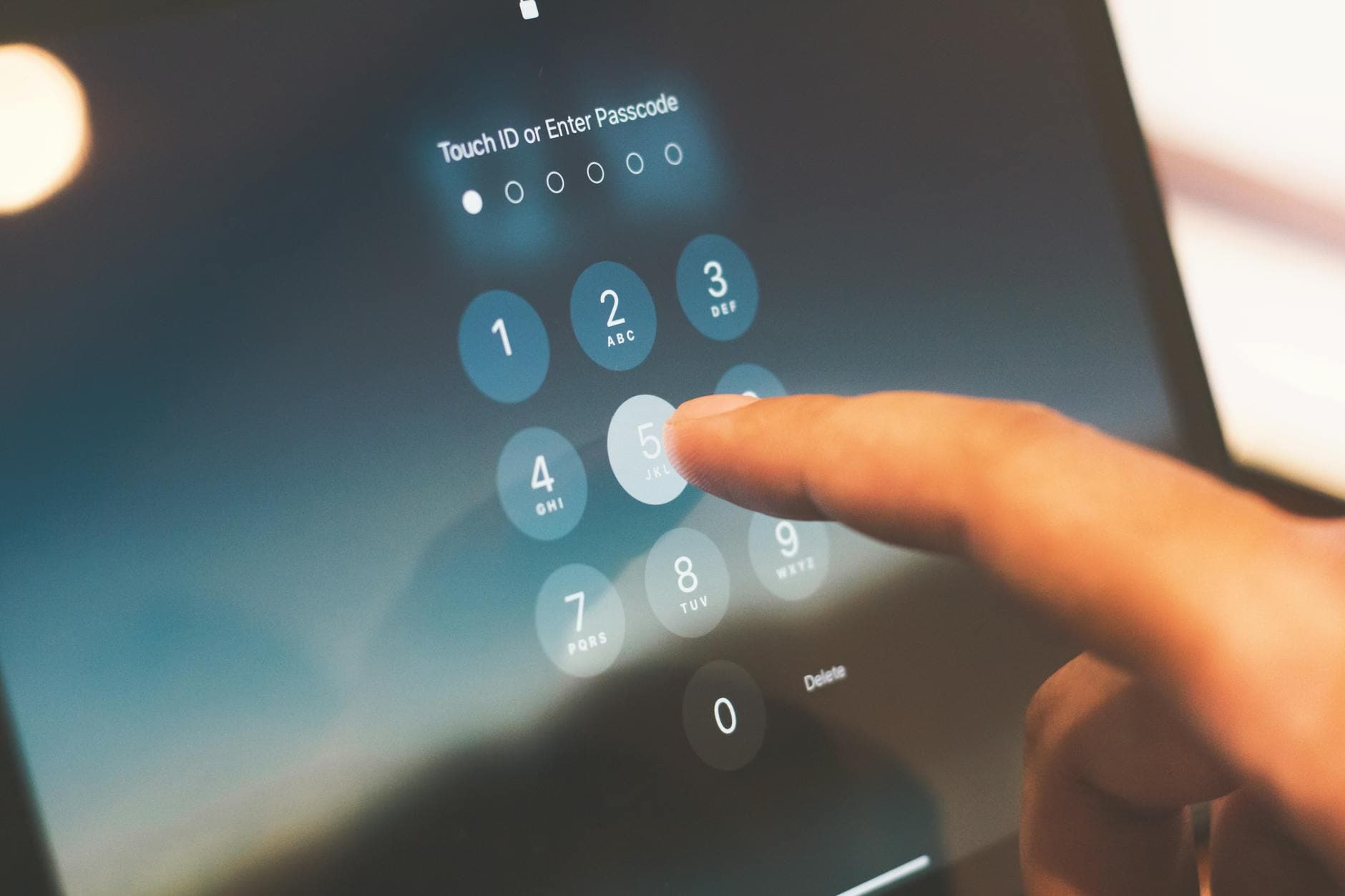
When it's time to enter card details, the audio path between your agent and customer is completely disconnected. The customer enters their information using their phone keypad while the system plays instruction messages to each party separately. The agent hears hold music and progress messages, so call recordings have no audio gaps. It also stops bad actors from asking for card details to be repeated verbally, and removes any possibility of sensitive data being spoken aloud. The system delivers consistent audio instructions to both sides, so no agent training is needed.
The disconnection is brief — typically under two minutes — and the customer knows what's happening throughout. They hear clear prompts telling them which field to enter (card number, expiration, CVV) and the system validates each entry in real time. If they make a mistake, they're asked to re-enter. When the payment is confirmed, the audio path reconnects and the conversation picks up where it left off.
Curious how Paytia fits in for your US merchant account? Have a quick chat with us — we'll show you in 15 minutes whether we're a fit.
The revenue impact#
Immediate payment capture is the most obvious benefit. No more waiting for invoices to be paid. Customers pay during the call, improving your cash flow and cutting administrative overhead. For businesses that currently rely on post-call invoicing, the shift to same-call payment can cut average days-to-payment from weeks down to zero. For a service business invoicing $20K-$40K a week on net-30 terms, that's working capital you no longer have to finance.
Upsell opportunities emerge naturally. Agents can confirm orders and discuss add-ons before the payment process starts. After payment's done, the conversation continues — there's a natural opening to suggest additional products or services. Because the payment step is smooth and quick, it doesn't disrupt the sales momentum the way a clunky payment process would.
Reduced no-shows make a big difference for service businesses. When customers commit to payment during the call, they follow through. No more chasing people who said they'd pay later. For appointment-based businesses — clinics, training providers, consultants — taking payment at booking eliminates the no-show problem almost entirely.
Higher conversion rates follow from trust. Customers trust the process more when they know their data is completely protected and can't be overheard or repeated verbally. That trust translates into willingness to complete the transaction on the spot rather than deferring to another channel.
Five revenue scenarios where the math is obvious#
The case for channel separation reads differently depending on the kind of contact center you run. Here are five scenarios drawn from typical US deployment patterns — different vertical, different starting point, same architectural answer.
Scenario one: a B2B service firm running net-30 invoicing. Roughly 600 service jobs a month, average ticket value $1,800, currently invoiced after completion with average payment delay of 38 days. Roughly 12% of invoices need at least one chase call, and around 3% end up in formal collections. Moving to same-call payment at job completion shifts the cash-conversion cycle from 38 days to under 24 hours on the converted portion. Even at a conservative 70% adoption rate (some customers still prefer purchase orders), the working-capital improvement on $1.08M of monthly billing is in the high six figures annually, before factoring in the staff time saved chasing the remainder.
Scenario two: an outpatient healthcare network running copay collection. 12 clinics, 240 appointments a day across the network, average copay $35. Pre-deployment, copays were collected at the front desk on arrival, with a no-show rate around 11% and an additional 8% of patients who arrived but didn't have a payment method on file. Moving copay collection to a confirmation call the day before the appointment, with channel separation handling the card capture, drops the unpaid-on-arrival rate to under 2%. On 240 daily appointments that's an extra $800-$1,200 a day in collected revenue per network, with the side benefit of fewer disputes at the front desk.
Scenario three: a higher-education enrollment team. 18 admissions advisors, 400 outbound enrollment calls a week during peak intake. Pre-deployment, the deposit-to-enroll step required a separate transaction in the student-information system, and roughly 22% of verbally-committed enrollments never paid the deposit. Adding channel separation to the enrollment call so the deposit is taken at the moment of verbal commitment drops the never-paid rate to under 6% — and the captured enrollments are higher-quality because the financial commitment is real, not theoretical.
Scenario four: a regional utility billing operation. 60 agents handling inbound customer-service calls, average call volume 4,500 a day, payment-related calls about 35% of the total. Pre-deployment, customers calling about a bill were transferred to an automated IVR for payment, with a measured 28% drop-off between the warm transfer and a completed payment. Switching to in-call payment via channel separation, with the agent staying on the line through the capture step, drops the abandonment rate to under 8%. On 1,575 daily payment calls that's an extra ~315 completed transactions a day at an average ticket of $140 — meaningful working capital and a measurably better customer experience.
Scenario five: a specialist retailer's order-line team. 35 agents, average order value $220, 1,800 phone orders a week. Pre-deployment, the payment capture step ran through a verbal read-back to the agent, with a 4-second pause for manual recording-pause and an average overall call duration of 7 minutes 20 seconds. Switching to channel separation removed the read-back and the pause-and-resume process, dropping average handle time to 6 minutes 5 seconds. On 1,800 weekly calls that's roughly 37 agent-hours a week recovered, which is the equivalent of one additional full-time agent's worth of capacity.
The CSAT and agent-experience impact#
The revenue numbers above are the visible side of the case. The customer-satisfaction side is less visible but consistent. Across the contact centers we've worked with, the pattern is the same: when the payment step stops being awkward, the overall call satisfaction score moves up — typically by 3-7 NPS points depending on the starting baseline.
US retailer Warby Parker measured these benefits directly after deploying secure phone capture: 42% fewer payment errors, 28% higher customer satisfaction on the payment step, and 35% shorter call times — all without retraining their agents on a new flow.
The mechanism is straightforward. Phone payments are stressful for customers when they have to read sensitive numbers aloud, particularly in public spaces, in a hurry, or with someone else in earshot. The verbal handover is also stressful for agents — most US contact centers train agents to repeat the digits back for confirmation, which adds friction to the call and creates room for transcription errors. Removing the verbal handover removes both stressors. The customer keys the digits privately; the agent stays in conversational mode; the call feels like a service interaction rather than a data-handling exercise.
Agent feedback after a channel-separation rollout is consistent enough to be predictable. Agents like that they no longer have to ask customers to repeat numbers in noisy environments. They like that the recording stays clean so QA can review the conversation without manual pause-handling. They like that they don't have to relocate to a "secure room" for payment calls. And they like that the workflow is the same regardless of whether they're in the office or at home — the architecture doesn't change with their location.
The AHT math that decides budget#
Average handle time (AHT) is the metric most contact center directors use to size operational headcount. A 60-second AHT reduction across a 200-agent center processing 8,000 calls a day is roughly 133 agent-hours recovered per day, which is the equivalent of about 17 full-time agents' worth of capacity at a typical US occupancy rate of 75-80%.
Channel separation contributes to AHT reduction in two specific places. First, by removing the read-back step on the card-capture portion of the call — typically 30-90 seconds depending on how rigorous the agent's verification script is. Second, by removing the post-call wrap time spent annotating the recording-pause event for QA. Together, the AHT reduction on payment calls is usually in the 60-120 second range, sometimes more on contact centers with particularly heavy verification scripts.
The ROI math is straightforward. A US contact center agent's fully-loaded cost is typically $35,000-$55,000 a year depending on geography and tenure. Recovering 17 full-time-equivalents at $45,000 each is $765,000 in annual capacity that doesn't have to be hired, on top of the PCI descoping savings. The deployment cost for a masking architecture at that scale is materially less than the first year's recovered capacity, which is why most channel-separation deployments pay back inside 9-15 months.
The compliance advantage#
For the underlying standard, see the PCI DSS document library — the requirements that DTMF masking helps you satisfy live there.
Channel separation cuts your PCI DSS compliance requirements by up to 95%. Since sensitive card data never touches your systems, staff, or processes, you no longer need secure "clean room" environments, pausing call recordings during payments, extra controls for remote workers, or complex data handling procedures. The detailed walk-through of how this lands under the current standard sits in our pillar on PCI DSS v4 for US contact centers.
This isn't just about avoiding fines — it's about running your business without security theater. The operational savings are real. No more awkward pauses in calls. No more worrying about whether remote workers are taking payments from a compliant location. No more annual PCI assessments that tie up your IT team for weeks. When card data stays out of your environment, the compliance burden drops dramatically and your team can focus on the work that actually matters.
For US businesses with state privacy obligations — CCPA in California, the SHIELD Act in New York, the Texas Data Privacy and Security Act, and similar regimes in Colorado, Virginia and Connecticut — there's an additional benefit. When card data never enters your recordings or systems, there's nothing to protect under access requests and nothing to delete under erasure requests. Your privacy team's life gets considerably easier.
Channel separation vs DTMF masking variants: a decision matrix#
DTMF masking is the umbrella term. Underneath it sit several technical implementations, and the choice between them matters more than vendor marketing usually suggests. Here's how the main variants compare for a US contact center decision.
Channel separation splits the audio path during card capture. The agent hears one stream (hold music, progress prompts), the customer hears another (entry instructions), and the gateway receives the digits via a separate signaling path. The card data never enters the recorded audio because the recorded audio doesn't contain it. This is the cleanest pattern for QSA evidence, the easiest for agent training, and the most resilient to integration edge cases. The trade-off is that it requires a vendor with proper telephony plumbing — it's not something you bolt on with a software pause.
Tone suppression intercepts the DTMF tones in the live audio stream and replaces them with flat tones before they reach the agent or the recording. The conversation continues uninterrupted. The pattern is technically clean if implemented at the right layer, but it depends on the suppression firing reliably on every tone — implementation quality varies between vendors.
Pause-and-resume is the legacy pattern. The agent presses a button to pause the recording during card entry and presses again to resume. It depends entirely on the agent executing the control on every call. Under v4.0.1 it's increasingly treated as an inadequate primary control because any missed pause creates a scope-failure event. Acceptable as a secondary control on top of a technical separation; not acceptable as the only control.
Verbal capture with redaction — the customer reads the digits, the agent types them into a payment field, and a downstream system attempts to redact the digits from the recording. This is the worst of the patterns from a compliance perspective because the digits exist in the recording for the moments between capture and redaction, and any redaction failure leaves SAD in scoped storage. Most US QSAs will not accept this as the primary control.
The decision matrix usually narrows quickly: channel separation for new deployments, tone suppression for existing telephony infrastructure that can't be re-routed cleanly, pause-and-resume as a deprecated fallback only. The technical-due-diligence questions to ask are: where in the call path does the masking happen, what evidence does the vendor produce for QSA review, and what's the failure mode if the masking layer goes offline mid-call.
Remote and hybrid working: channel separation makes it simple#

The shift to remote and hybrid working created a real headache for businesses that take phone payments. Under traditional PCI DSS models, agents processing card payments need to work in a controlled, monitored environment — typically a supervised office with restricted desk policies, no personal devices, and sometimes even no pen and paper. Replicating that at someone's kitchen table is, to put it mildly, difficult.
Some businesses responded by banning remote workers from taking payments entirely. Others tried to enforce home-working policies that were almost impossible to verify — "make sure nobody else is in the room when you process a payment" isn't exactly enforceable when you can't see the room. A few invested heavily in virtual desktop infrastructure and monitoring software, adding cost and complexity that smaller businesses couldn't afford.
Channel separation cuts through all of this. Because card data never reaches the agent — whether they're in a head office, a branch, a co-working space, or their spare bedroom — the location doesn't matter. The same security applies everywhere. There's no need for clean-desk audits, no need for monitoring software, and no need to restrict which staff can take payments based on where they're sitting that day.
For businesses with agent-assisted payment workflows, this is transformative. Your entire team can take payments securely from any location, on any shift pattern, without you having to worry about whether their home setup meets PCI DSS requirements. The technology handles the security. Your people handle the customers.
This matters for recruitment too. If you can only offer payment-handling roles to people willing to work on-site five days a week, your talent pool shrinks. Offer flexible, hybrid working with the same payment capabilities, and you attract a wider range of candidates — including experienced agents who left the industry specifically because of rigid location requirements.
Customer experience wins#
Customers get business-grade security with a professional, straightforward process. They receive clear instructions for entering their card details, knowing their data can't be overheard or repeated verbally. The whole thing feels secure and professional — not like going through a security checkpoint. The system delivers consistent instructions to both customer and agent every single time. No gaps in call recordings, no confusion about the process, and no risk of sensitive data being spoken aloud.
We hear consistently from businesses that their customers comment positively on the experience. "That was easy" and "I wish every company did it that way" are common pieces of feedback. When the payment step is smooth rather than stressful, it changes the entire tone of the interaction.
US contact center deployment patterns#
How channel separation actually deploys varies depending on the telephony platform the contact center is running on. The architectural principle is the same; the integration pattern differs.
On Amazon Connect the typical pattern is a Contact Flow that diverts to the masking layer's SIP endpoint during the payment step, then returns the customer to the agent leg after authorization. The integration uses Connect's native SIP capabilities and doesn't require any change to the agent CCP. Deployment is usually a one-week exercise for the integration plus a week of UAT.
On NICE CXone the pattern is similar but uses CXone's Studio scripting to handle the divert and return. The masking layer presents as a SIP destination in the routing logic. Integration with the CXone agent desktop is via a screen-pop widget that shows the masked card progress to the agent.
On Five9 the integration uses the Five9 IVR studio for the divert and the Five9 Adapter framework for the agent-side visibility. The masking layer can be configured as a standard SIP endpoint, and the agent sees the masked progress in the standard agent UI.
On RingCentral Contact Center the integration uses RingCentral's voice routing rules to send the customer to the masking layer during card capture, with the agent staying on the call via the standard agent interface.
On Talkdesk the integration uses Talkdesk Studio routing to the masking layer's SIP endpoint, with the Talkdesk Workspace handling the agent-side progress display.
On Zoom Contact Center the integration uses Zoom's CCaaS routing capabilities, with the masking layer presented as a SIP-accessible destination during the payment portion of the call.
On Genesys Cloud and Genesys Engage the integration uses Architect flows for routing and the standard Genesys agent desktop for visibility. These deployments tend to be a touch more complex because Genesys environments often involve substantial customization.
For contact centers still on on-premise PBX systems — Avaya, Cisco UCM, Mitel, and similar — the integration usually happens at the SIP trunk layer or via a SIP-attached IVR that handles the divert. These deployments require a bit more upfront discovery work because every on-premise environment is shaped by its history, but they're well-established patterns.
Implementation reality#
How long channel separation takes depends on your existing telephony setup. No staff training required — the technology handles the complexity while your agents focus on the customer. It works with most US contact center platforms — Five9, NICE CXone, Amazon Connect, RingCentral, Talkdesk, Zoom Contact Center, 3CX — and fits into your existing workflow without disruption. You keep doing things the way you do now, but with enterprise-level security added on top. For more on the platform side, see our piece on cloud contact center solutions.
Who this works for#
Channel separation works well for any US business taking phone payments where the relationship with the customer matters. The technology adapts to different use cases, but the core benefit is always the same: secure payment capture without interrupting the conversation. The full pillar on the right way to take card payments over the phone covers the architectural choices from start to finish.
Retail and e-commerce businesses use channel separation to capture payments during order-line calls. A customer phones in to place an order, the agent confirms the items and delivery address, and payment happens mid-call without the agent ever seeing the card details. For retailers handling returns or exchanges, the same process works in reverse — refunds process through the same secure channel, keeping everything in one interaction.
Healthcare and medical services find it particularly valuable for clearing outstanding balances and taking deposits. A patient calls about an appointment, the front-desk team confirms the details, and the deposit or co-pay is taken during the same call. No invoice to send, no payment to chase, and no card data sitting in the practice management system. For HIPAA-covered entities, that scope reduction matters in both directions — PCI and PHI handling stay clean. Our piece on HIPAA payment processing covers the regulatory overlap in detail.
Education and training providers use it to secure bookings with upfront payment. When a prospective student calls to enroll on a course, the payment happens during the conversation. This eliminates the gap between "I'd like to sign up" and "I'll pay when I get the invoice" — a gap where a significant percentage of enrollments quietly disappear.
Insurance brokers, utilities, municipal authorities, membership organizations, debt collection agencies, claims teams — if your business involves conversations that end with "and would you like to pay that now?", channel separation makes the answer "yes" more likely and the process more secure.
The cost of inaction: what staying with pause-and-resume actually costs#
The natural starting point for a channel-separation business case is what you save by switching. The honest other side of that calculation is what you spend by not switching — and that figure is often larger than the deployment cost itself.
On a typical 150-agent US contact center running pause-and-resume, the annual ongoing cost has four major components. PCI assessment as SAQ D runs $50,000-$100,000 a year all-in (QSA fees, ASV scanning, pen test, internal compliance time). Agent PCI training and re-certification adds another $20,000-$40,000 in trainer time and lost productivity. QA overhead specifically on detecting missed pauses runs another $25,000-$50,000 in supervisor sampling and forensic review time. And the cyber-insurance premium uplift attached to a wide PCI scope is typically $15,000-$35,000 a year more than it would be under a descoped architecture.
That's a $110,000-$225,000 annual operating cost on the compliance program itself, before factoring in any direct breach risk. A channel-separation deployment at the same scale typically lands at $40,000-$80,000 a year in run-rate cost, with the descoping benefits collapsing the SAQ D obligations to SAQ A. The net annual saving is consistently meaningful, and that's before counting the revenue benefits described earlier in this piece.
The third hidden cost is opportunity cost on the agent operations. Every minute an agent spends on a card-handling-specific compliance task — re-reading numbers for confirmation, pausing and resuming recordings, walking to a "secure room" — is a minute not spent on the customer relationship. Across a year, on a typical mid-market contact center, that opportunity cost adds up to the equivalent of 5-12 full-time agents' worth of capacity. Recovering that capacity is the part of the case that often catches the COO's attention more than the compliance savings do.
What a buyer's evaluation checklist actually looks like#
When a US contact center evaluates channel-separation vendors, the questions that matter for the long-term relationship aren't always the questions that come up first. The checklist below is what we'd want to be asked.
Ask about the AoC. Is the vendor itself a PCI DSS Level 1 service provider, with a current AoC issued in the last 12 months, covering the architecture they're proposing to sell you? Ask to see the document, not just hear the claim.
Ask about the integration pattern coverage. Different vendors support different integration patterns. The seven options that exist in practice are network-level divert, PBX-level divert, IVR transfer, agent conference, vendor outbound, vendor WebRTC, and direct SIP integration. A vendor that supports one pattern is forcing your architecture to fit their constraints. A vendor that supports all seven is offering to fit your existing setup.
Ask about gateway coverage. Which US payment gateways does the vendor integrate with out of the box — Stripe, Braintree, Authorize.Net, Cybersource, Adyen US, Worldpay (FIS), smaller specialists? Existing integrations are faster, cheaper, and lower-risk than building new ones during your project.
Ask about the tokenization story. Does the captured card data flow through to a gateway-issued token your CRM can store without bringing the CRM into PCI scope? Recurring-billing customers especially need this answer to be clean.
Ask about reporting and reconciliation. Can your finance team see captured transactions in near-real time, reconciled against the gateway settlement report? Channel separation that breaks finance's reconciliation flow creates more problems than it solves.
Ask about the failure mode. What happens if the masking layer is unavailable mid-call? The right answer is graceful — the call routes back to the agent's normal flow with a clearly-documented fallback path that doesn't drop the call. The wrong answer is "we've never had an outage" because every vendor has eventually had an outage.
Ask about onboarding time. From signed contract to first live payment, how many weeks? For a typical cloud contact center deployment, the answer should be 4-8 weeks including UAT. Substantially longer suggests either the vendor's integration process is heavyweight or the platform combinations you're using haven't been integrated before.
Ask about references. Customers in your sector, at your scale, with a similar contact center platform, who'd take a 20-minute reference call. The answer to that question — particularly the part where the vendor proactively offers to set up the call — tells you a lot about the maturity of the customer base.
A 30-60-90 day deployment outline#
For a contact center moving from a baseline pause-and-resume architecture to channel separation, the realistic timeline from project kickoff to live payments is 30-90 days depending on the complexity of the telephony environment.
Days 1-30 are discovery and integration design. The masking vendor's solutions team walks the existing telephony architecture, confirms the integration pattern, and produces a written architecture document showing where the divert happens, where the return happens, and what the failure-mode behavior looks like. The contact center's IT team configures SIP routing or API access on its side. Test calls go through to confirm the routing works.
Days 31-60 are UAT and prompt design. The masking vendor's prompts (the audio the customer hears during card entry) are recorded in the contact center's brand voice, tested for clarity, and signed off by the customer-experience team. A small cohort of agents — typically 5-10 — runs live test calls with internal users to confirm the agent-side experience works as designed. Any rough edges in prompt timing, agent screen-pop layout, or error-handling get polished.
Days 61-90 are the staged rollout. The masking layer goes live for one team first, monitored intensively for the first week. Adoption rates, drop-off rates, and customer-feedback patterns are tracked. If the numbers look healthy — they usually do — the rollout extends to the rest of the contact center over the following two to four weeks. By day 90, the entire contact center is processing payments through the masking layer, and the QSA evidence package is being assembled for the next assessment cycle.
This is the standard pattern. Faster deployments are possible (we've done same-day go-live for contact centers with simple architectures), and longer deployments happen when telephony complexity, multi-region rollout, or unusual compliance overlays add scope. The 30-60-90 outline is the right mental model for budgeting and stakeholder communication.
The competitive edge#
While your competitors deal with compliance headaches and security concerns, you're capturing more sales and building stronger customer relationships. Channel separation turns payment security from a cost center into something that actively drives revenue. The technology that protects your customers also protects your business — from compliance risks, from lost sales, from operational drag. That's not just good security. That's good business.
Frequently asked questions#
What is DTMF masking?
DTMF masking is a technique that stops a customer's card details — the digits they type on their phone keypad — from being heard by your agent or stored in your call recordings. The customer's tones are intercepted before they reach your systems, so the card number never enters your environment in the first place.
Is DTMF masking PCI compliant?
DTMF masking on its own doesn't make you PCI compliant — PCI DSS covers a lot more than just phone payments. But it does remove one of the biggest PCI scope problems: your agents, call recordings, and transcripts stop being in scope because they never touch cardholder data. That can move you from a full SAQ D self-assessment down to a much shorter SAQ A.
What's the difference between DTMF masking and channel separation?
DTMF masking is the outcome — the agent and the recording never get the raw card digits. Channel separation is one way to deliver that outcome: the audio path is split for the few seconds card entry happens. Other techniques exist (suppression, clamping), but channel separation is the cleanest because nothing has to "scrub" tones after the fact — they simply don't reach your side of the call.
Does channel separation work with US cloud contact center platforms?
Yes — and it's actually easier with cloud platforms than with on-premise PBXs, because the routing happens in software. We work with Five9, NICE CXone, Amazon Connect, RingCentral, Talkdesk, Zoom Contact Center, and 3CX, among others. The architectural pattern is the same wherever your contact center runs.
Will my agents still be able to help the customer during the payment?
Yes. The agent stays on the line and can see progress indicators (e.g., "card number entered", "expiration entered") without ever hearing or seeing the digits themselves. If the customer makes a mistake, the agent can guide them through a retry. The conversational experience doesn't break.
What does DTMF stand for?
Dual-Tone Multi-Frequency. It's the technical name for the sound your phone makes when you press a key on the keypad — each digit is a unique combination of two audio frequencies layered together. DTMF was invented in the 1960s at Bell Labs to replace pulse dialing.
What's the realistic payback period on a channel-separation deployment?
Most US deployments pay back inside 9-15 months. The components are PCI descoping savings (typically $30K-$60K a year for a mid-market contact center), AHT recovery (often the equivalent of multiple FTEs of capacity), reduced agent attrition (lower training overhead), and the revenue impact of moving from invoiced-after to paid-on-call. The exact mix differs by vertical.
Related guides in this cluster#
What Is DTMF? A Plain-English Guide to Phone Tones
DTMF stands for Dual Tone Multi-Frequency — the beeps your phone makes when you press a key. How it works, and why it matters for secure payments.
DTMF Masking and PCI Compliance: The Real Picture
Does DTMF masking make phone payments PCI compliant? Here's what it really does to your PCI scope, your SAQ, and the controls you still need.
DTMF Masking vs Pause-and-Resume: Which Should You Use?
DTMF masking vs pause-and-resume call recording: how each affects PCI scope, where pause-resume fails in real contact centers, and which the standard now favors.
How to Choose DTMF Masking Software: A Practical Checklist
A practical seven-step checklist for choosing DTMF masking software — what to ask vendors on PCI scope, integration, audit trails, and failure modes.
Related reading#
- PCI Compliance for Telephone Payments: 2026 US Guide
- PCI DSS v4 for US Contact Centers: A Practical Guide
- Cloud Contact Center Solutions: Features and Security Guide
- Card Not Present Explained: Risks and How to Reduce
- What Is Tokenization? A Plain-English Guide
For the product side, see our DTMF masking solution.
Curious how Paytia fits in? Have a quick chat with us — we'll show you in 15 minutes whether we're a fit.