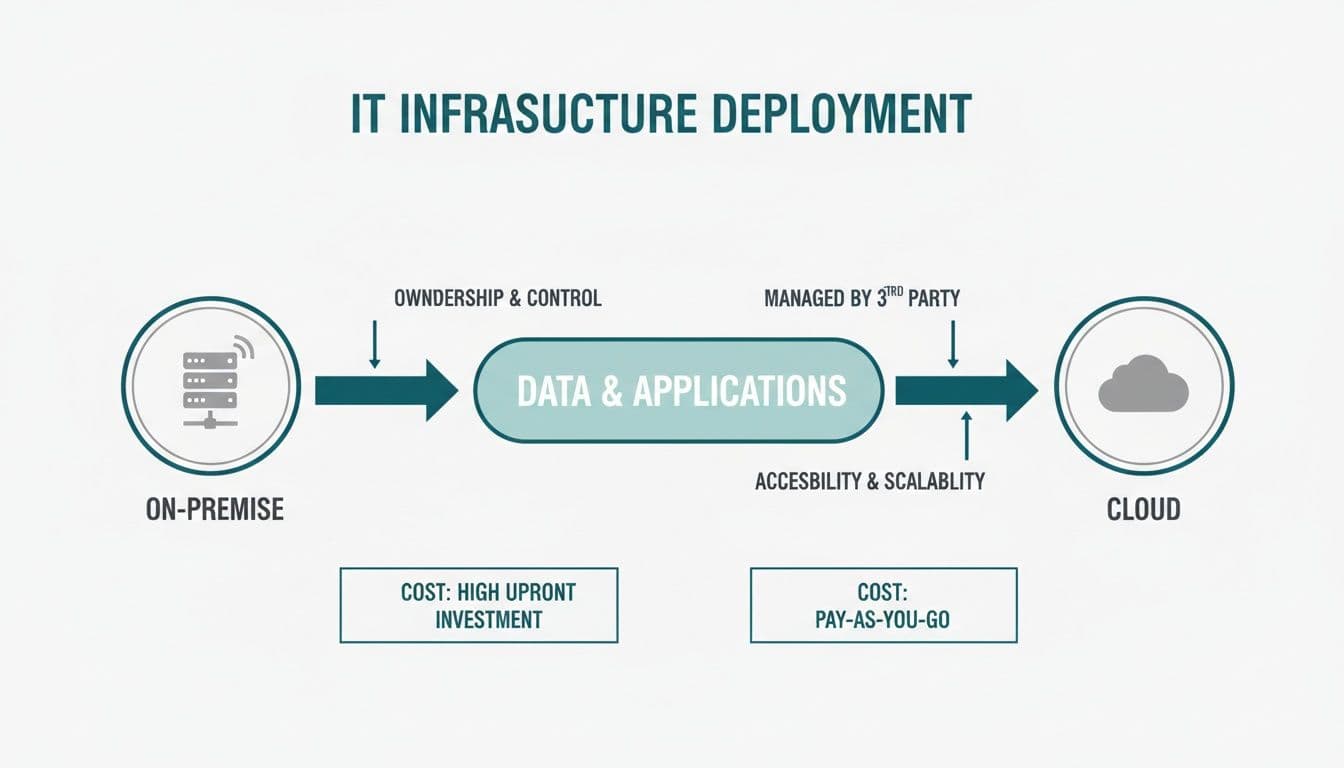
Most contact centres don't operate on a single channel anymore. Customers call, email, use live chat on the website, and increasingly send messages via SMS or WhatsApp. Your support team handles all of it — often within the same day, sometimes within the same interaction if a customer follows up on a previous contact.
When those interactions involve payments, every channel has its own compliance challenges. What works for phone payments doesn't automatically work for chat. What's secure on email isn't the same as what's secure on SMS. A multi-channel operation needs a payment approach that holds up across all of them.
The Compliance Problem Across Channels
PCI DSS applies wherever cardholder data is stored, processed, or transmitted. That's the standard's language — and it means it applies to every channel where payment details might appear, not just the ones you've explicitly set up for payments.
The problem most contact centres run into is that customers sometimes volunteer card details in channels that weren't designed to handle them. A customer will email their card number to chase a failed payment. A chat conversation will drift into payment territory when a customer wants to update their billing. An SMS reply to a payment reminder will include card digits in the message body.
Once that happens, your email system, your chat platform, and your SMS infrastructure are all potentially within PCI scope — whether you planned for that or not.
Voice Payments: The DTMF Solution
The voice channel has the most established approach to secure payments: DTMF masking. Rather than asking customers to read their card details aloud — which puts the agent and the call recording system in the data flow — DTMF masking lets customers enter card digits via their phone keypad while the agent stays on the line.
The DTMF tones are intercepted and masked before reaching the agent's headset or the recording system. The agent hears a series of neutral beeps. The recording captures those beeps, not the actual digits. The card data travels directly from the customer's keypad to the payment system, bypassing your contact centre infrastructure entirely.
This descopes the voice channel from PCI. Your call recordings are clean. Your agents don't handle card data. Your contact centre workstations aren't in scope.
For self-service payments without agent involvement, IVR (Interactive Voice Response) is the alternative — the customer keys their payment details through an automated menu. IVR suits high-volume, standardised payment scenarios like bill payments and renewals.
Chat Payments: The Payment Link Approach
For live chat — whether on your website, within a CRM tool, or via a messaging platform — the right approach is almost always a payment link rather than any form of card data entry within the chat itself.
A payment link sent through a chat window takes the customer out of the chat environment and into a secure hosted checkout page run by a PCI-compliant payment processor. The customer enters their card details in that secure environment. The chat transcript captures the link and the confirmation — not the card data.
This is important because chat platforms, including many enterprise contact centre platforms, are not designed to handle card data. Their logging, archiving, and search functions will capture whatever is typed in a chat window. If an agent asks a customer to type their card number in a chat and the customer does it, that data is now in your chat archive — in scope, unencrypted, and very hard to remediate.
The safe rule for chat: if payment is needed, send a link. Never ask a customer to type card details in a chat window, and if a customer does so unsolicited, your agents need to know to redact or delete that message immediately.
Chat channels blur into conversational commerce as soon as you let customers buy without leaving the thread.
Email Payments: The Same Rule Applies
Email is even more problematic than chat. Email systems retain messages indefinitely. They're often backed up, archived, and searchable by support tools. Card data in an email sits in a CRM inbox, potentially on a mail server, possibly backed up to cloud storage — across multiple systems, none of which are designed for card data handling.
The answer for email payments is also a payment link — and specifically one that doesn't require the customer to reply to your email with card details. When you send a payment chase or an invoice with a payment option, the link should take the customer to a hosted checkout. Their card details are entered there, not sent back to you via email.
Paytia's Payment Chase feature automates this for outstanding invoices: it sends a payment request with a unique link, tracks whether the customer has opened it, and follows up automatically. The payment is completed on the Paytia-hosted checkout page, and your email thread never contains card data at any point.
SMS Payments: High Open Rates, Specific Compliance Requirements
SMS has an open rate of around 98%, compared to 20% or less for email. For payment requests — particularly for overdue invoices or time-sensitive confirmations — SMS is significantly more effective at getting a response quickly.
Payment links sent by SMS work on the same principle as email: the link takes the customer to a hosted checkout, the payment is completed there, and the SMS thread never contains card data.
There are UK-specific compliance considerations for SMS payments beyond PCI. PECR (Privacy and Electronic Communications Regulations) governs unsolicited marketing messages by SMS. If you're sending payment requests to customers you've had prior dealings with, these typically fall under legitimate transaction messages rather than marketing, but your team should understand where the line is. The ICO's guidance on PECR is the reference point for UK businesses.
How a Multi-Channel Payment Strategy Works in Practice
In a properly configured multi-channel operation, the payment flow looks consistent regardless of which channel initiated the interaction:
- A customer contacts support via any channel — phone, chat, email, or SMS
- The agent (or automated system) identifies a payment is needed
- On voice: the agent initiates a DTMF payment request and the customer keys their details
- On chat, email, or SMS: the agent (or automation) sends a payment link to the customer's preferred contact
- The customer completes payment on the hosted checkout
- All channels receive a confirmation — the agent's screen updates, any ticket or CRM record is marked as paid, the customer gets a receipt
The critical point is that no card data passes through your contact centre infrastructure on any channel. The voice channel is protected by DTMF masking. The written channels are protected by the payment link model. Your PCI scope is limited to Paytia's platform and the card schemes' infrastructure — not your contact centre software, not your CRM, not your email or chat archives.
Self-Service Across Channels
For businesses with higher payment volumes, a self-service option on each channel reduces agent workload without compromising compliance:
- Voice self-service — IVR payment lines for customers who want to pay without speaking to an agent
- Chat self-service — Automated payment link generation triggered by a chatbot when a customer indicates they want to pay
- SMS self-service — Automated payment chase sequences for outstanding balances, with a unique link in each message
- Email self-service — Invoice emails with embedded payment links that don't require any agent involvement
Paytia supports all of these. Our platform integrates with the telephony infrastructure for voice and IVR, and generates payment links for the written channels — managed through a single dashboard, with reporting across all channels.
What to Audit in Your Current Setup
If you're reviewing your current multi-channel payment arrangements, these are the questions worth asking:
- Are your agents ever asking customers to type card details in a chat or email? If yes, this needs to stop immediately and a payment link process needs to replace it.
- Are your call recordings searched or reviewed in a way that might surface card data? If pause-and-resume is in use, there's a risk that some recordings contain card numbers.
- Does your CRM or helpdesk archive messages that might contain card data? Review what's in there and what the retention policy is.
- Do customers sometimes send card details to you unsolicited? If so, your team needs a clear process for handling those messages without acting on the card data and for flagging the compliance issue.
Getting the payment handling right across all channels is one of those areas where a small process change makes a large compliance difference. If you want to talk through how Paytia works with your current setup, we're happy to talk.